Bringing Home The Reality Of War
One of my fonder childhood memories took place one summer in the late 80s when my sister and I (code name Bill and Lance) fought as Contras somewhere in South America. With acrobatic somersault moves, flamethrowers, and even the occasional spread gun, we managed to liberate Nicaraguans and the human race from alien forces that were threatening to take over the world. Your welcom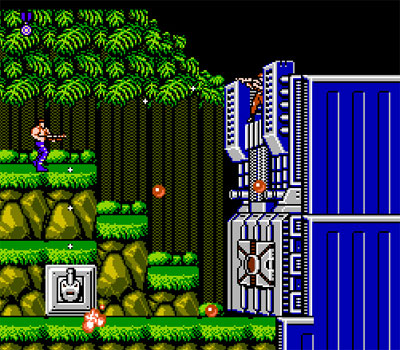 e.
e.
I’m thinking about that old Nintendo game Contra because of a new controversy surrounding the combo of virtual game play and war. Can a video game get too close to reality? Should there be limits?
Imagine losing someone you love in Iraq. Now imagine kids playing a video game featuring the same sights and sounds of that battleground with characters fighting and dying in ways modeled after real life. You might feel that war is not a game and should not be trivialized. You might be enraged, especially of the thought that someone could profit handsomely from the endeavor.
On the flip side of the debate you have the game creator who insists his goal is to pay tribute to American heroes. Soldiers and commanders from the actual conflict are advising game creators and appearing in live interviews to explain what took place. Sure there’s money to be made but also a $20 million dollar investment. For what? Only the redefinition of historical documentary as we know it. Someone interested in the subject can not only learn from participants but actually enter the world being described, literally “occupy the actual space” as one expert put it.
> |
| Screenshots from Atomic’s Fallujah game. |
So are we talking about a shameless enterprise to capitalize financially at the expense of grief-stricken mourners or is this the ultimate tribute, one of the most powerful ever paid to America’s fighting heroes?
***
Video game designer Peter Tamte dreams of creating a first person shooter game set during the Battle of Fallujah which took place in Iraq in 2004. Four years into the project, everything began to fall apart for Tamte. As Newsweek writer Dan Ephron wrote in his stellar June article “The Battle Over the Battle Of Fallujah:”
“…[N]ow relatives of dead Marines were angry, and the game’s distributor and partial underwriter had pulled out…”
That distributor was Konami, the same company that produced Contra back in the day. Konami decided to back off after public backlash through phone calls and emails.
Parents of soldiers killed in action have shared varying feelings, outrage as well as confusion. Ephron wrote of Tracy Miller who lost her son, Cpl. Nicholas Ziolkowski, in Iraq last November. Miller believes that despite the game maker’s genuine desire to pay tribute and not offend, the release of such a product will inevitably face opposition. According to Ephron, Miller fears that recreating Fallujah will “further desensitize youngsters to the horrors of war” and perhaps even provide insurgents with sensitive operational procedures. That last point brings up a different debate about the potential role of the government or military in the creation of such a game. Talk of censorship has already been thrown out by internet commentators, but maybe the security risks are real.
The first realistic war game came out for Playstation a decade ago when Steven Spielberg and Dreamworks got behind a World War II first-person project called Medal of Honor. That fran chise and subsequent spinoffs have created intense realities that transform spectators into participants using actual declassified information at times. The big difference of course is that there are no threatening nazis around anymore to tip off.
Another powerful point of protest comes in the possibility of seeing the death of loved ones played out through the game. In video games, you get a second chance. Imagine how excruciating it might be to see how a slight change in circumstances could have altered everything. In fake life, the story being told changes with decisions and actions of the person holding the controller.
***
The most influential support for the project comes from combat veterans of Iraq. Several participants in the Fallujah fighting, code-named Operation Phantom Fury, hope their personal experience will help shape the type of game they themselves want to play. Soldiers often use simulators to train and sometimes just enjoy playing video games.
Much of this generation of fighters grew up playing Contra or Medal of Honor. Gaming technology is in their blood; it’s another way to do what soldiers and most humans long to do: tell their story. Continue reading
Life. Culture. Education.
Life as Pop Culture Professor Clay Morgan
In The Matrix, Morpheus tells Neo he can take the blue pill and go on believing whatever he wants to believe. Or he can take the red pill to stay in Wonderland and find out how deep the rabbit hole goes.

This is a red pill type site that provides information in an entertaining way. It’s about clear thinking and good writing. It’s about finding meaning amidst the absurd. It’s about humor and truth.
I’m a writer / speaker who teaches history and political courses at a couple of local colleges. Where is local, you say? Well, that would be Wonderland of course.
On topics ranging from pop culture to the meaning of life, my brain’s always poppin’. Take the red pill and unplug.

 EduClaytion